
WELCOME BONUS 300%
UP TO €2000 + 100
FREE SPINS
UP TO €2000 + 100
FREE SPINS
Home → Games
Casino games at RockNRolla Casino
When to Surrender 16 vs 10?
Blackjack Surrender allows the player to forfeit half the stake after the dealer checks for blackjack, effectively improving the RTP by approximately 0.08 percentage points compared to standard rules. This specific rule modifier reduces the house edge from 0.46% to -0.08%, turning a slight disadvantage into a marginal player advantage when optimal strategy is applied. Consequently, players facing a dealer's ten should surrender their hard sixteen to minimize long-term losses on that specific hand. Early surrender offers even greater value up to -0.6 percentage points but is extremely rare in modern online environments.
Craps Pass Line bets carry a base house edge of 1.41%, with a standard deviation of 1.00 per roll and an expected loss of 0.42% per decision. This baseline risk applies equally to Come bets, which share identical mathematical properties and payout structures of 1:1 on wins. Players relying solely on these primary wagers face a significant statistical hurdle over extended sessions without supplementary betting options. The consistency of this edge makes bankroll management critical for anyone engaging with these fundamental table games.
Baccarat Player bets utilize eight decks and offer a fixed payout ratio of 1:1 with zero commission on winnings. The associated RTP stands at 98.76%, resulting in a house edge of 1.24% and a standard deviation of 0.95 for each wager placed. While statistically sound, this option remains less favorable than the Banker bet due to a 0.18 percentage point higher edge. High rollers often avoid this side of the table to preserve capital efficiency against the more advantageous banker position.
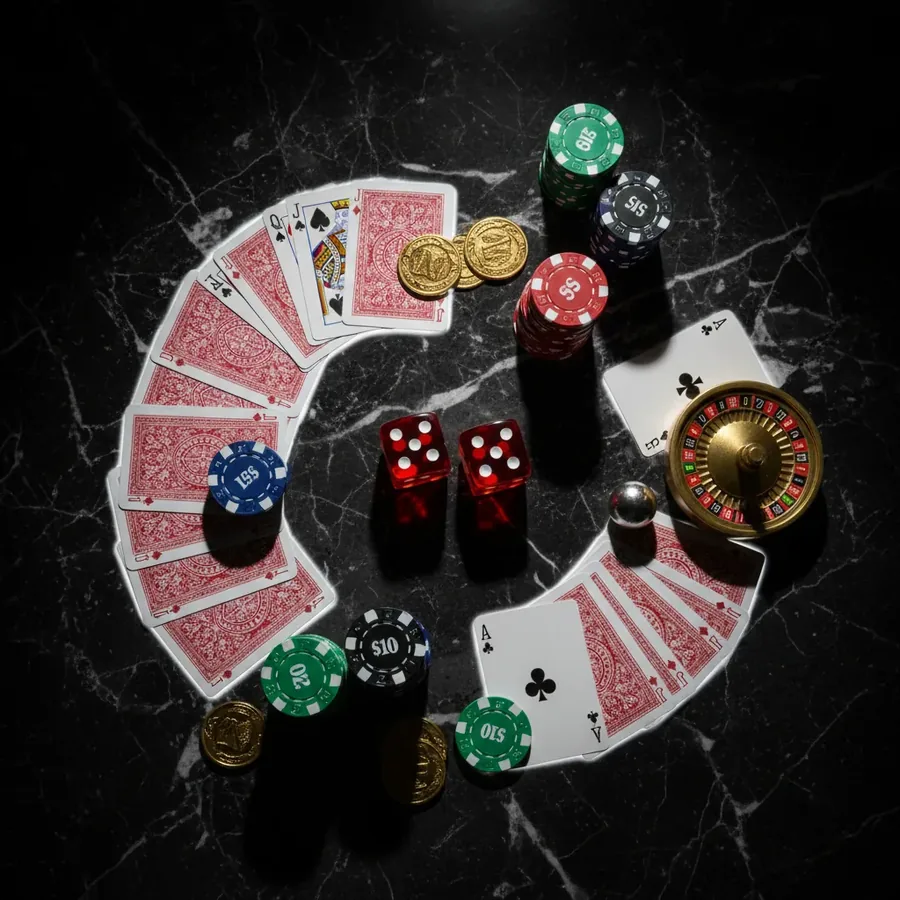
Craps Odds Bet with 0 Percent House Edge
The Craps Free Odds bet is the only casino wager featuring a true 0.00% house edge, paying out according to actual odds rather than inflated casino rates. When combined with a Pass Line bet under a 3-4-5x mode, the overall game RTP rises to 99.63%, significantly lowering the combined house edge to just 0.37%. This unique feature allows high rollers to mitigate the inherent risk of the initial pass line wager through substantial additional exposure. The payout structure varies by point number, offering 2:1 for fours and tens, 3:2 for fives and nines, and 6:5 for sixes and eights.
Standard deviation for Don't Pass wagers sits at 0.99, closely mirroring the volatility of the Pass Line variant despite its slightly superior 1.36% house edge. This metric indicates lower variance compared to other table games, providing a steadier bankroll trajectory for disciplined players seeking consistent action. Push conditions on twelve reduce the frequency of losses, contributing to the improved mathematical expectation relative to the Pass Line. Such precision makes it a preferred choice for those analyzing risk-adjusted returns across different craps strategies.
Video Poker Deuces Wild — Not So Ugly Ducks delivers an impressive 99.73% RTP with a minimal house edge of 0.27%, utilizing a frequent full-pay table structure. Five of a Kind pays 16 units, while Straight Flushes return 10, creating a volatile yet profitable environment for skilled operators. Natural Royals award 800 coins, establishing a high ceiling for potential payouts within the game’s mathematical framework. This specific title demonstrates how video poker variants can approach slot-like volatility while maintaining table-game level returns.
Jacks or Better 9/6 Full Pay requires maximum coin input of five to unlock the 4000-coin Royal Flush bonus, yielding a 99.54% RTP when played optimally. The payout table defines key hands including Full Houses at 9 units and Flushes at 6, distinguishing it from inferior 8/5 or 7/5 versions. Standard deviation reaches 4.42, reflecting higher variance typical of video poker compared to traditional card games. Players must adhere strictly to optimal strategy to achieve the stated theoretical return without deviating into suboptimal holds.
Multihand Blackjack with Up to 5 Hands
Blackjack with six decks, S17 rules, DAS, DOA, and 3:2 payouts achieves a 99.54% RTP alongside a 0.46% house edge under perfect basic strategy. This configuration eliminates insurance opportunities while allowing doubling on any two cards and after splits, enhancing strategic flexibility. The absence of surrender limits early exit options, forcing players to navigate complex decision trees with precision. Multihand play amplifies these dynamics, requiring rapid assessment of multiple outcomes simultaneously.
Casino Hold'em Ante + Call operates on a 99.18% RTP with a 2.16% house edge on the Ante and a 0.82% risk element on the total cycle. Players commit an initial Ante followed by a Call equal to twice the Ante amount after viewing the flop, folding if unsatisfied. The average total wager per round equals 2.64 times the Ante, explaining the disparity between Ante-only and cycle-based edges. Straight Flushes pay 20:1 on the Ante, while Royal Flushes award 100:1, offering substantial rewards for strong holdings.
Roulette American features thirty-eight sectors including double zero, generating a 5.26% house edge across all standard outside bets. The Five Number Bet covering 0, 00, 1, 2, and 3 presents a worse 7.89% edge, making it the most unfavorable proposition on the wheel. Payouts remain fixed at 35:1 for straights regardless of sector count differences between European and American wheels. This structural disadvantage necessitates careful bet selection to preserve bankroll integrity during extended sessions.
Jacks or Better: Check Payout Table Before Betting
Sic Bo Small and Big bets under Atlantic City rules provide a 97.22% RTP with a 2.78% house edge, representing the strongest wagers available in the game. Small covers sums from four to ten, while Big encompasses eleven to seventeen, both paying 1:1 and losing on triples. These options contrast sharply with specialized bets like Specific Doubles carrying an 18.52% edge, highlighting the importance of selecting appropriate market types. Players targeting low-variance action should prioritize these foundational propositions over exotic combinations.
Craps Pass Line bets yield a 98.59% RTP with a 1.41% house edge, matching the mathematics of Come bets exactly. Each roll carries a 0.42% expected loss rate, compounded by a standard deviation of 1.00 across thousands of decisions. This consistency allows for predictable bankroll erosion patterns when no odds are attached to the initial wager. Strategic adherence to this baseline ensures alignment with published theoretical expectations without introducing unnecessary complexity.
Blackjack single-deck games with classic rules and 3:2 payouts deliver a remarkable 99.85% RTP, reducing the house edge to merely 0.15%. Fewer decks decrease card counting effectiveness while simultaneously improving player odds compared to eight-deck variants. However, many venues compensate this advantage by lowering payouts to 6:5, negating the benefit entirely. Verification of payout structures remains essential before committing funds to any single-deck format.
When is Splitting Aces and Eights Sensible?
Baccarat Banker bets with five-percent commission generate a 98.94% RTP and a 1.06% house edge, proving superior to Player wares across eight-deck shoes. Effective payouts stand at 0.95:1, compensating for the banker’s positional advantage in drawing third cards. Standard deviation measures 0.93, indicating relatively stable performance metrics compared to other table games. High rollers frequently favor this option due to its combination of low edge and manageable variance.
Video Poker Jacks or Better 9/6 Full Pay demands strict adherence to optimal strategy to realize its 99.54% RTP and 0.46% house edge. Maximum coin requirements enable access to the 4000-coin Royal Flush bonus, dramatically increasing expected value per hand. Deviations from prescribed holding patterns immediately degrade returns, underscoring the necessity of memorized decision matrices. This precision distinguishes professional play from recreational approaches lacking systematic discipline.
Casino Hold'em Ante + Call results in a 2.16% house edge on the Ante component alone, though the overall cycle edge drops to 0.82% considering the doubled Call wager. Players must evaluate flop strength accurately to justify committing additional chips beyond the initial ante. Straight Flushes reward 20:1 on the Ante, while Royal Flushes pay 100:1, incentivizing aggressive calls with premium holdings. Understanding these payout tiers informs rational folding versus calling decisions throughout the hand.
Game categories at a glance
| Category | Examples | Stakes From | Highlight |
|---|---|---|---|
| Slots | Thunderstruck II, Diamond Mine Megaways, Sticky Bandits Trail of Blood | 0,10 EUR | thousands of titles |
| Table games | Roulette, Blackjack, Baccarat | 0,50 EUR | classic rules |
| Live casino | Ultimate Roulette, Sweet Bonanza CandyLand | 0,20 EUR | real dealers |
| Jackpot games | Mega Moolah, Divine Fortune, Age of the Gods | 0,20 EUR | progressive pools |
| Instant games | Aviator, Plinko, Mines | 0,10 EUR | fast rounds |
| Video poker | Jacks or Better, Deuces Wild | 0,25 EUR | strategy based |
Video Poker: check payout table before betting
Jacks or Better 9/6 Full Pay offers a 99.54% Return to Player (RTP) when played with optimal strategy, representing a house edge of just 0.46%. This theoretical long-run average requires a maximum bet of five coins to unlock the Royal Flush bonus of 4,000 credits instead of the standard 800. Failing to meet this coin requirement significantly reduces the expected return for high stakes players aiming for maximum value.
Deuces Wild Not So Ugly Ducks presents a higher RTP of 99.73% with a house edge of only 0.27%, making it statistically superior to many other variants. The game features a specific payout structure where Five of a Kind pays 16 and Straight Flushes pay 10, differing from full-pay versions like Illinois Deuces at 98.91%. Players must verify these exact coefficients to ensure they are accessing the most favorable mathematical conditions available.
The payout table directly dictates the volatility and expected loss rate per hour for serious video poker enthusiasts. A deviation from the 9/6 Jacks or Better schedule can increase the house edge substantially, eroding the bankroll faster than the stated 0.46% suggests. Analyzing the specific payout ratios for hands like Full House and Flush is essential before placing any bets.
Why the Double Zero Almost Doubles the House Edge
American Roulette contains 38 sectors including both 0 and 00, resulting in a standard house edge of 5.26% on even-money bets. This figure is exactly double the edge found on European wheels due to the additional losing pocket that pays out at standard odds. High rollers should avoid this variant entirely as the statistical disadvantage compounds rapidly over large volumes of wagers.
The Five Number Bet covering 0, 00, 1, 2, and 3 carries a severe house edge of 7.89% with an RTP of 92.11%. Payouts are fixed at 6:1 for covering five sectors, creating what analysts call a trap bet with no equivalent on European wheels. This specific wager maximizes the casino's advantage compared to other options on the same table layout.
Straight bets on American Roulette pay 35:1 despite the true odds being 37:1 against the winning number. The presence of the double zero effectively doubles the house advantage compared to single-zero variants without increasing payout ratios. Strategic players seeking to minimize losses will find this wheel mathematically inferior for high-stakes action.
Table Games Often Count Only 10 Percent
Tischspiele contribute only 10 percent toward the wagering requirement for the 300% welcome bonus up to €2,000 plus 100 free spins. This low contribution rate means that every €100 wagered on eligible table games counts as merely €10 toward clearing the bonus terms. High rollers must place significantly larger total bets to satisfy the turnover conditions compared to slot players.
Craps Pass Line bets have a house edge of 1.41% and an RTP of 98.59%, but their slow pace combined with the 10% contribution rule makes them inefficient for bonus clearance. The combination of Pass Line and 3-4-5x Free Odds yields a combined house edge of 0.37%, yet the bonus progress remains sluggish. Players should calculate the effective cost of wagering against the restricted contribution percentage.
Blackjack using six decks with S17, DAS, DOA, and 3:2 payouts offers a strong RTP of 99.54% and a house edge of 0.46%. Despite the excellent game rules, the 10% table game contribution factor drastically extends the time required to convert bonus funds into withdrawable cash. Strategic decision-making becomes secondary to the mathematical reality of the bonus terms.
What doesn't count: bets over 5 EUR
Wagering limits typically restrict qualifying bets to a maximum of 5 EUR per round when playing with active bonus funds. Any stake exceeding this threshold invalidates the corresponding portion of the wagering progress and may void associated winnings. High rollers accustomed to larger stakes must adjust their betting patterns to remain compliant with the platform rules.
Sic Bo Special Bets like Specific Triples pay 180:1 but carry a house edge ranging from 7.87% to 18.52% depending on the specific wager type. While the payouts are substantial, the strict 5 EUR limit ensures that the potential return on investment remains capped during bonus play. Exceeding this limit on high-volatility games results in immediate forfeiture of bonus eligibility.
Baccarat Banker bets offer a low house edge of 1.06% with a 5% commission on wins, providing an effective payout of 0.95:1. However, the maximum bet constraint applies uniformly across all table games regardless of their statistical favorability. Players attempting to exploit low-edge opportunities must do so within the narrow window allowed by the 5 EUR restriction.
Plein Pays 35:1, Cheval Pays 17:1
European Roulette pays 35:1 for a Plein (straight-up) bet and 17:1 for a Cheval (split) bet, reflecting the true odds of hitting one or two specific numbers. These payout structures are consistent across both American and European wheels, though the underlying house edges differ significantly due to the number of pockets. Understanding these standard payouts is crucial for calculating risk exposure on high-stakes tables.
Corner bets pay 8:1 while Street bets pay 11:1, offering different risk-to-reward ratios for various board positions. The consistency of these payouts allows players to model their bankroll management strategies based on known probabilities rather than arbitrary casino rules. High rollers often utilize combinations of these bets to hedge their exposure across multiple outcomes.
Dozen and Column bets pay 2:1, covering 12 numbers each with a lower variance compared to straight-up wagers. These even-money adjacent bets provide a more stable path for chip progression strategies, although the house edge remains constant at 2.70% for European wheels. Comparing these payouts to the 35:1 straight-up option highlights the trade-off between frequency and magnitude of returns.
Declining Insurance: The Most Common Blackjack Mistake
Insurance offers a 2:1 payout if the dealer reveals a blackjack, yet the house edge on this side bet stands at 5.26% in standard six-deck games with S17 rules. This margin is identical to American Roulette and far exceeds the 0.46% advantage held by the casino on the main hand when players use optimal strategy. Accepting insurance increases the overall cost of play significantly compared to declining it during non-blackjack outcomes.
The mathematical expectation for insurance is negative because only one card in the remaining deck can complete the dealer's hand out of roughly fifty-two cards. Declining the offer preserves the 99.54% RTP of the base game, whereas accepting it drags the effective return down toward 94.74%. High rollers avoid this trap to maintain their bankroll efficiency over thousands of hands.
A player betting 100 € per hand loses an average of 0.46 € on the main wager but would lose 5.26 € per 100 € bet on insurance alone. Refusing the side bet keeps the long-term loss predictable and minimal under strict basic strategy guidelines. Deviating from this discipline erodes the statistical advantage gained through precise decision-making.
Baccarat commission: 5 percent on each Banker win
The Banker bet carries a house edge of just 1.06% due to drawing rules that favor the banker position slightly more than the player. To offset this superior probability, casinos charge a 5% commission on all winning Banker wagers, effectively reducing the payout to 0.95:1. This fee structure ensures the casino retains its mathematical advantage despite the high win rate of the banker.
In contrast, the Player bet pays even money at 1:1 with no deductions, resulting in a higher house edge of 1.24% for the operator. The difference between the two edges is exactly 0.18 percentage points, making the Banker bet the statistically superior choice for serious gamblers. Ignoring the commission calculation leads to inaccurate profit projections.
For a high roller placing 10,000 € in total Banker bets who wins half, the gross winnings are 5,000 €. After applying the 5% commission, the net profit drops to 4,750 €, while the theoretical loss remains anchored at the 1.06% edge. This explicit deduction must be factored into any detailed session analysis or bonus turnover planning.
Straight 35:1 Against the Chance of 1 in 37
American Roulette features a wheel with 38 sectors including both single zero and double zero, which alters the probability calculations for all straight bets. A single number hit pays 35:1, but the true odds of winning are 1 in 38, not 1 in 37 as found in European variants. This discrepancy creates a house edge of 5.26%, making it one of the least favorable table games for high stakes.
The presence of the extra double zero sector doubles the house advantage compared to the single-zero wheel configuration used elsewhere. While the payout remains fixed at 35:1, the increased number of losing pockets reduces the return to player to exactly 94.74%. High rollers targeting lower volatility games should avoid this specific layout entirely.
Betting 100 € on a single number yields a potential win of 3,500 €, but the expected value over time reflects the 5.26% disadvantage. This negative expectation compounds faster in American wheels than in those with fewer zeros, accelerating bankroll depletion for aggressive betting strategies. The five-number bet worsens this further with a 7.89% edge.
Submit documents no older than three months
Verification requirements mandate that submitted identification documents must not be older than three months to ensure current validity and security compliance. This timeframe applies strictly to passports, driver licenses, or national ID cards presented during the Know Your Customer process. Expired or outdated files are automatically rejected by the system without manual review.
High rollers withdrawing substantial sums must provide proof of address and source of funds alongside these valid IDs to satisfy anti-money laundering regulations. The three-month limit prevents the use of stale data that might not reflect recent changes in identity or residence status. Failure to meet this deadline delays fund processing until fresh documentation is uploaded.
A document dated four months ago fails the age check regardless of its visual clarity or official stamp, requiring immediate re-submission. This rule ensures that the account holder's identity matches current legal records precisely. Maintaining up-to-date files avoids administrative bottlenecks that could interrupt high-value transactions or bonus eligibility checks.
How Much Does One Mistake Cost in 100 Hands?
Deviating from basic strategy in Blackjack increases the house edge from 0.46% to approximately 2.00% depending on the severity of the error. For a high roller betting 100 € per hand, this mistake costs an additional 1.54 € per hand on average compared to optimal play. Over 100 hands, the cumulative loss rises from 46 € to 200 € purely due to suboptimal decisions.
The difference in expected loss scales linearly with the bet size, meaning larger wagers amplify the financial impact of strategic errors significantly. A single deviation like standing on 16 against a dealer 10 can swing the outcome negatively in the short term, though the long-term average reveals the true cost. Consistent adherence to strategy minimizes this variance-driven erosion.
At a stake of 500 € per hand, the cost of one common mistake totals 770 € over 100 rounds instead of the 230 € baseline. This 540 € excess loss represents a direct transfer of wealth from the player to the house caused by incorrect play. Disciplined execution of the 99.54% RTP strategy is essential for preserving capital in high-volume sessions.
Contact
Live - online chat
Banking









Providers












RockNRolla Casino 2026